From Fire to Full Capacity: Gifford’s Ice Cream Rebuilds for the Future
Gifford’s produced their famous "HomeMaine" ice cream out of the temporary space throughout much of 2025, before transitioning into the rebuilt facility in phases. Courtesy Gifford’s Ice Cream
After a devastating 2023 fire, the family business returns to full production with a redesigned facility focused on flow, flexibility and long-term growth.
By KELLEY RODRIGUEZ
More than two years after a fire devastated its Skowhegan, Maine, production facility, Gifford’s Ice Cream is back at full capacity and producing in a rebuilt plant designed specifically for the future of its business.
On a recent episode of From the Cold Corner, Gifford’s Ice Cream CEO Lindsay Skilling and COO JC Gifford detailed the company’s journey from emergency response and temporary production to a new ultramodern facility that improves flow, adds flexibility and positions the business for growth.
“After the fire, for a full year, we were without production in Skowhegan, Maine,” said JC Gifford. “On February 3, 2024, a year and a day after the fire, we were able to produce a limited capacity” from a temporary setup that represented “roughly 15-20% of what our old footprint was.”
Watch Gifford’s Ice Cream Maine production facility rebuilding process.
While the overall footprint of the facility is still the same, the internal layout is more efficient and safer. Courtesy Gifford’s Ice Cream.
That temporary operation kept product moving but came with clear limitations, including relying on co-manufacturers for part of their inventory and temporarily discontinuing certain flavors.
“It was not an ideal layout. Efficiency-wise, it was the best we could do,” he said. “We could still produce quality ice cream, just wasn’t able to do it at the same speed as we were pre-fire.”
Gifford’s produced their famous “HomeMaine” ice cream out of the temporary space throughout much of 2025, before transitioning into the rebuilt facility in phases.
From Ice Cream ‘L’ to Operational Space
Production began in the new section last fall and as peak season approaches, the team is still working through nuances and bringing back its full product lineup.
“I think it was last week or the week before was the first time that we’ve been able to make Rainbow Sherbet and our Crazy Vanilla,” Skilling said. “It ran successfully, so that was a huge relief.”
While the overall footprint of the facility remains largely unchanged, the internal layout has been significantly improved to support a more efficient production flow.
“As of today, we have a pint line, a quart line and our foodservice, the 3-gallon bulk line,” said JC Gifford. “We moved our processing room from one side of the building to the opposite side of the building, so the flow of product goes raw to production to finished goods into the freezer. That was probably the biggest structural change to our layout.”
The rebuild gave Gifford’s an opportunity to rethink a facility that had evolved over time rather than being purpose-built for ice cream production.
“We were no longer pigeonholed,” said JC Gifford. “We can design this the way we want for production flow, ease, but also food safety.”
Among the most impactful changes were higher ceilings and improved use of space.
With the rebuilt facility, Gifford’s has been able to expand its year-round pint line, adding three flavors. Courtesy Gifford’s Ice Cream.
“We raised the ceilings, was probably the biggest thing,” he said, noting the company’s physical footprint could not expand outward. “We gained production space, functional space,” allowing room for “a second filler and another bundler or wrapper for their pints.”
Moving coolers out of the production area provided more room.
Despite the advantages of starting fresh, the rebuilding process was far from straightforward. Early expectations that the facility could be cleaned and restarted quickly proved unrealistic.
“In an older building, the smoke had caused more damage than they originally had thought. That’s when we learned that the entire middle section of the building needed to be completely demoed to the ground,” Skilling said.
In order to supply its own family-owned ice cream stands, as well as retail and foodservice channels after the fire, Gifford’s partnered with four co-packers to produce 30 of their most popular flavors, but many fan favorites, like Toasted Coconut and Black Raspberry Chocolate Chip Frozen Yogurt, could not be made. Courtesy Gifford’s Ice Cream.
The team worked through multiple design iterations before landing on the final layout.
“We probably had four to five different designs through the course, from the time of the fire to the time of completion,” JC Gifford said. “That changed just out of necessity.”
Equipment presented another layer of complexity, with a mix of replacement, repair and reuse strategies needed to get back online.
“There was a lot of hiccups along the way,” Skilling said. “There’s a lot of equipment that we’ve had to probably put more money into than we should have if we would have had the time to replace it.”
Some legacy systems – like the1940s-era Cherry Burrell freezers responsible for slow-churning their ice cream – remain in operation for now.
“We have limped, and with our terrific maintenance team and outside vendors, we have made it possible to keep those Cherry Burrells up and going,” said JC Gifford. “But we do know additional upgrades will be necessary over time.”
During the interim, Skilling described the production employees as “working in a shoebox,” navigating tight spaces and crowded equipment. For employees, the most immediate improvement has been the transition from cramped temporary conditions to a fully open production floor.
A fifth-generation company, the fire’s impact extended well beyond operations. The emotional toll of the loss — and the responsibility of rebuilding — was significant.
“To see our father’s face at that time was rough,” said JC Gifford, recalling the first walkthrough after the fire. “It was a lot of flashbacks of old memories.”
Skilling said the leadership team felt a deep sense of responsibility.
“We felt like we failed them,” she said. “This is our generation … we’re at the helm, we’re driving the bus and it happened on our watch.”
At the same time, both emphasized the role of employees, partners, and customers in the company’s recovery.
“It would have been easy to give up,” JC Gifford said. “If we weren’t doing it for the family … the people within the building, the people that serve our ice cream and the fans that we have.”
“Everyone played their role, whether it’s their normal, typical role or not,” Skilling said. “Anything and everything.”
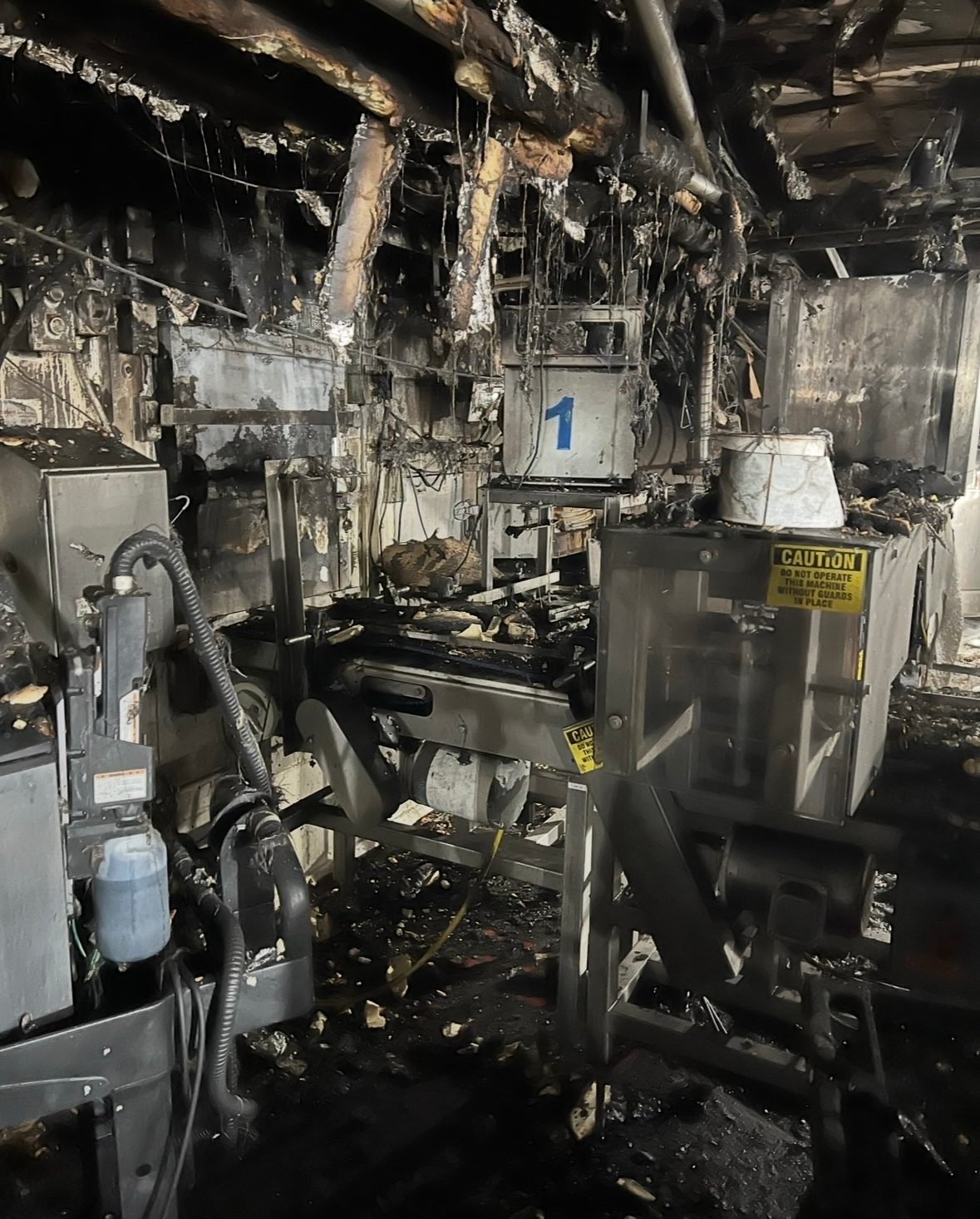
Each year, Gifford’s serves over 1 million cones at their three family-owned and operated stands and more than 2 million more gallons in grocery stores, independent ice cream shops, restaurants and more. The company is ramping up production at its new ice cream manufacturing facility after a 2023 fire. Courtesy Gifford’s Ice Cream.
Gifford’s Next Generation?
Looking ahead, both leaders see growth and stability as key markers of success, saying maintaining their ice cream stands and jobs for their employees are paramount.
Gifford’s serves over 1 million cones annually at their three family-owned and operated stands and sells more than 2 million more gallons via grocery stores, independent ice cream shops, restaurants and more.
“I would love it if we chatted with you in three to five years, and we were at the point where we were needing to consider adding another tri-tray hardening unit,” Skilling said. “That would mean that we’re busting at the seams.”
For JC Gifford, the long-term goal is rooted in continuity.
“We want to be the generation to succeed and to pass it on if we could,” he said.