Americold’s Russellville Site Highlights Heritage, Future of Cold Storage
An expansion completed about 18 months ago added 136,000 square feet of space to the Russellville location, taking the building to 140 feet and adding 42,000 pallet positions served by automated storage and retrieval (AS/RS). Courtesy Americold.
Arkansas warehouse uses automation, state-of-the-art tech to serve nearby Conagra frozen manufacturing site.
By KELLEY RODRIGUEZ
Blending a legacy site with the latest in automation and logistics technology, Americold’s Russellville, Arkansas facilityisR&FF’s Cold Storage Facility of the Year.
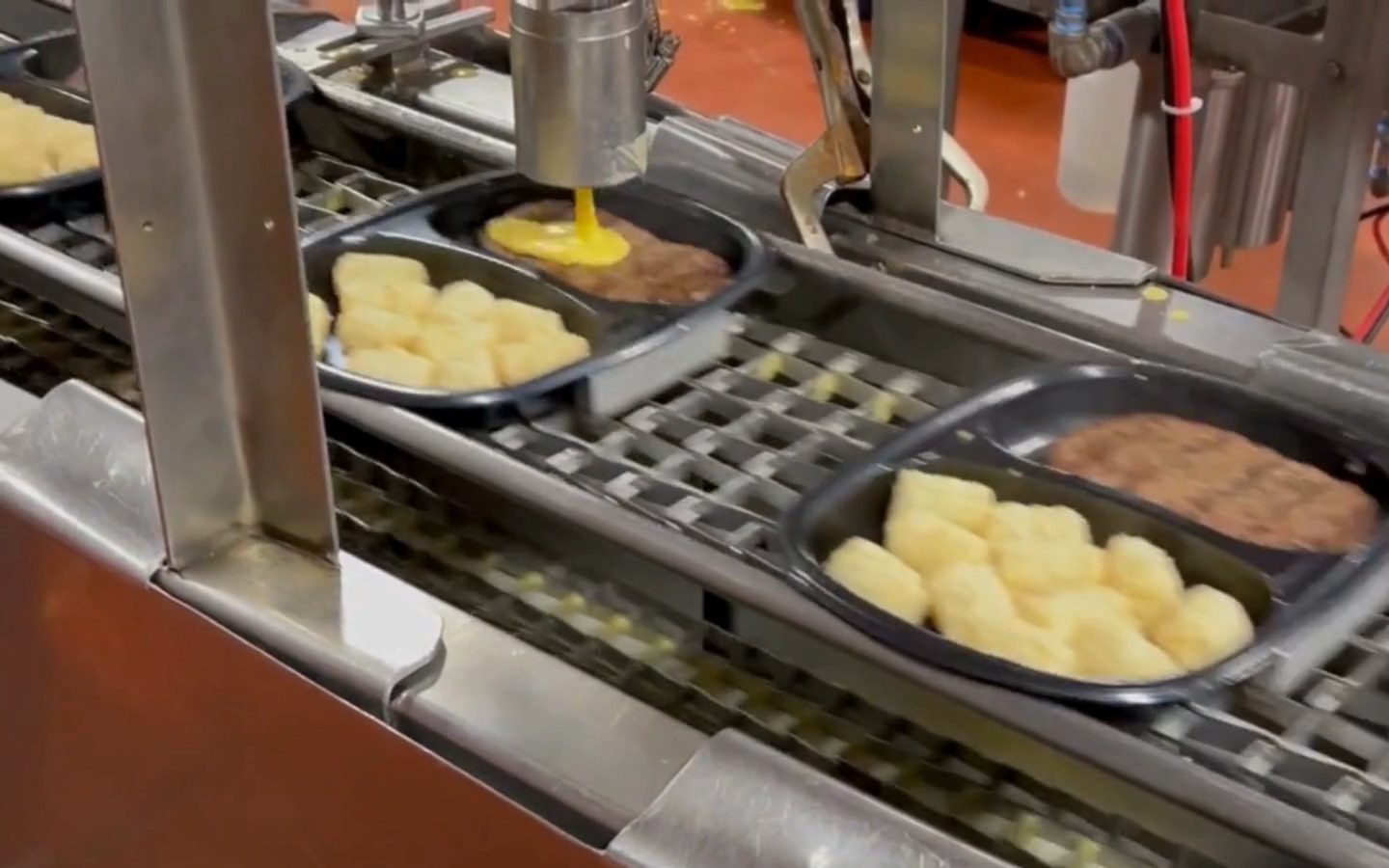
The 300,000-square-foot facility on Elmire Avenue in Russellville is steps away from a Conagra plant and services the brand’s frozen portfolio, which includes Healthy Choice, Birds Eye, Banquet and others. The “plant advantaged” cold storage warehouse is less than a mile from the sprawling Conagra site.
Automated trailer unloading & Loading (ATU/L) systems cut trailer unloading time to under 4 minutes. Courtesy Americold.
An expansion completed about 18 months ago added 136,000 square feet of space and took the building to new heights – 140-feet – and added 42,000 pallet positions served by automated storage and retrieval (AS/RS).
“We’re very proud of this building,” said Bryan Verbarendse, president of the Americas at Americold. “Here, you get to see both sides of the coin. We have a conventional side that is very much industry standard – about 35-foot ceilings, traditional racking and forklifts. And we were able to expand with next-generation automation.”
“Our customer is less concerned about what side of the building it’s coming from; they just want to make sure that truck is on time and in full when it leaves here for their customers. We want to make sure that product that flows through our supply chain is handled in the most efficient, safe manner possible and gets to the end destination on time,” he said.
Initially opened in the 1980s and expanded in the ‘90s, the conventional warehouse side of the building holds about 20,000 pallets for a total capacity of just under 60,000.
Frozen foods produced next door are held here for an average of just a few days before being shipped out to regional DCs.
Over 100 trucks a day are processed at the site, which operates 24 hours a day, 360 days a year, said Brandon Shipley, general manager of automation at Americold.
The facility offers value-added services including cross-docking and transloading.
A 2023 expansion at Americold’s Russellville site added over 130,000 square feet of space served by an AS/RS. Courtesy Americold.
Integration & Automation
Designed and built by Stellar, in conjunction with Americold’s in-house automation team, the Russellville facility received the 2024 Built By the Best Award from the Controlled Environment Building Association (CEBA).
It represents the latest in warehouse and cold chain technology.
A fully integrated automated storage and retrieval system (ASRS) with seamless conveyor, gantry and loop connections to docks.
Cognex High-Speed Steerable Mirror (HSSM) scanners enable barcode reading flexibility and auto-receipt of goods.
A scale weighs the pallet and scans it for dimensions to ensure accuracy before a pallet support board is inserted. The PSBs are built in partnership with local nonprofit organization employing workers with special needs.
“They help ensure that as the pallet goes through the automation. A pallet can only have 2.5 inches of lean in any direction – any more than that and it’s going to reject out. We average about a 3% reject,” Shipley said. “The operator can scan the pallet, and the system will tell them what’s wrong with it.”
Ancra Automated Trailer Unloading & Loading (ATU/L) systems cut trailer unloading time to under 4 minutes. Both the Americold and Conagra sites deploy the automated unloading systems.
Scanners enable barcode reading and auto-receipt of goods as they enter the facility. Courtesy Americold.
“Things don’t necessarily move faster but everything’s moving at once,” Shipley said.
The expansion added gantry cranes capable of moving up to 20,000 cases daily are used for layer picking. The average operator can pick about 250 cases an hour, Shipley said.
A handful of employees operate the site’s “command center,” where they act as conductors of a high-tech balancing act. The facility uses a Blue Yonder warehouse execution system (WES) and custom integration modules provide real-time inventory updates and ERP sync with the nearby plant.
For example, if a slowdown occurs on the automated side, operators can shift incoming products to a semi-auto unloading area where they are manually inducted into the AS/RS.
“You’re looking at the entire warehouse at once,” Shipley said. “We own the product from Conagra to here, so we watch that product as it loads onto their autotruck loaders and as it travels the seven-eighths of a mile.”
The expansion added an energy-efficient ammonia refrigeration system and was designed with insulated metal panel (IMP) exterior walls to minimize energy loss. Site design supports the use of electric yard tractors and future-ready autonomous vehicles. Miracle Software’s generative AI system is currently in development for document intelligence, predictive maintenance and real-time decision support.
Americold’s Russellville facility includes 64 doors and about 190 employees. Courtesy Americold.
Future of Feeding the World
The most impressive part of the Russellville campus?
“First off, the partnership that we had with (Conagra) and coming up with a design that meets their needs so clearly. The utilization of this building is outstanding,” Verbarendse said. “The technology is impressive, don’t get me wrong, but I think the quality of the team and the relationship they have with their largest customer is what impresses me the most. They just have an attitude that they took this technology and integrated into their existing model. They have really embraced the implementation in new technology – almost none of them had experienced this before it was installed – and they’ve embraced that technology and it’s turned into a facility that Americold is very proud to have in our portfolio.”
Shipley, who has spent over 20 years at Americold, starting as a lift operator at Russellville, agreed.
“One of the intricacies here is, depending on the need, we have to be able to pivot. All the associates are warehouse associates – they are trained in lift operation, they are trained in checking in and order prep, they are trained in the automated operation systems so depending on what the need is you can, you can put players where you need them,” Shipley said. “You’ll see them transition through the building and that to me is one of the biggest things in a warehouse – the monotony. Here, being able to rotate through the building breaks up the monotony and you can adjust to the needs of the business as you need to.”
Americold owns and operates 245 temperature-controlled warehouses worldwide, employing nearly 17,000 people and overseeing 1.5 billion cubic feet of cold storage.
Verbarendse said the 3PL is “doubling down” on looking at ways to add automation.
“We’ve got capacity opportunities across the entire network. As you think about those aged assets … there’s a tremendous opportunity for us as an industry to look for those smaller scale opportunities to automate within the existing network because trying to replace the entire network with a fully-automated network is probably not realistic in the short term,” Verbarendse said. “I’ve had a chance to visit some of our European operations that have deployed automated layer-picking and the rest of the warehouse is conventional. You don’t have to automate an entire site to see the benefits of automation within the supply chain.”
He also pointed to partnerships with other logistics providers, like the company’s recent partnership with CPKC and a site under construction in Canada.
“We can’t continue to operate in silos. The more that we can start integrating … the real unlock is going to come with those partnerships and creating a more seamless environment for how goods move across the Americas.”
You can hear more on this story in our From the Cold Corner podcast interview with Bryan Verbarendse. Listen now or download it from your favorite podcast platform.