Stampede’s Sunland Park Plant Scales Sous Vide Solutions for Foodservice, Retail
With over 500,000-square-feet of production space across multiple facilities, Stampede is the largest sous vide processor in the U.S. Courtesy Stampede Culinary Partners.
Stampede Culinary Partners is betting big on sous vide success.
By Kelley Rodriguez
The protein processor first expanded outside its Midwest headquarters in 2018, purchasing a 140,000-square-foot former Tyson facility, needing a manufacturing site closer to West Coast markets.
With over $30 million in renovations, the 1980s-era plant was partially operational just over a year later.
Today, it is one of four Stampede production facilities, each producing about 85 million pounds of food annually.
With about 600 employees across three daily shifts, the Sunland Park site currently runs at about 65% capacity and shows no signs of slowing down.
“Being ready to respond often wins the business,” said Brock Furlong, president and CEO, during a tour of the manufacturing facility and test kitchen. “’If you build it, they will come’ is kind of the motto.”
The SQF (Safe Quality Food) certified facility produces sous vide, RTE, par-fry and batter & breaded products, with a focus on brisket, burnt ends, bulgogi and refrigerated pet food.
In 2020, Stampede opened a clean room for post-cook lethality processing, a first for the company.
The plant’s initial two smokehouses were another first for Stampede and a sign they were moving in the right direction: the facility currently runs seven smokehouses to meet demand.
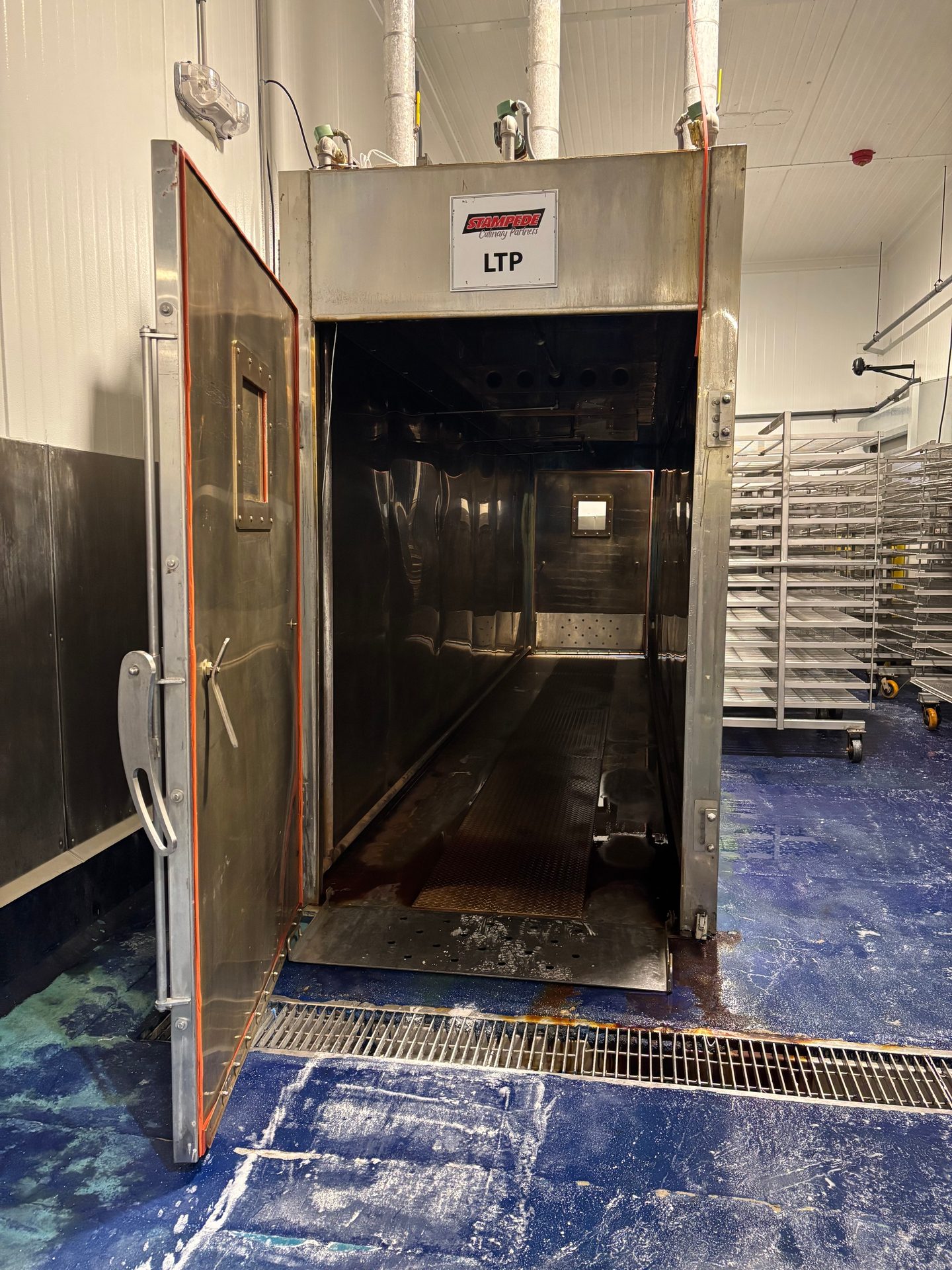
The LTP method extends the shelf life of refrigerated meats and meals to between 90 and 180 days based on taste and texture, not solely microbial growth, according to Stampede’s research. Courtesy Stampede Culinary Partners.
“If we had to do it all over, we would have added on way more smoke capacity,” saidJohn Villa, Sunland Park’s director of operations. “Especially the combination of the frying with the smoke and the sous vide. You’re getting a smoked product that has a juicy bite – all the work of the back of the kitchen is done here. We do smoked, sliced brisket a dozen different ways. Flavor, cut, size – whether its sliced or seared – while do have consistency within each SKU, we have so many because they are made for each customer.”
Passthrough ovens were installed down the middle of production – with raw one side, cooked on the other – allowing a combination of processes. For example, Villa said, burnt ends are marinated before being smoked for four hours and finished in sous vide.
While automation is used in areas like packaging, many of the processes remain manual, for example, Stampede’s “hand trimmed” products by butchers certified through a partnership with New Mexico State University.
Because they are often “batch oriented,” Stampede relies on flexibility in equipment and employees.
“First and second shifts are often running different products on different lines,” Villa said. “Each line will change on average once a day.”
Culinary Capability
Celebrating its 30th anniversary, the company in 2024 changed from Stampede Meats to Stampede Culinary Partners to better reflect varied capabilities, something Furlong attributes to capturing other business, like sous vide egg bites.
With no minimum order quantity, the LTO boom has benefited Stampede, accounting for about 10% of its revenue, Furlong said.
Stampede last year opened a new test kitchen at Sunland Park, as well as plants in Georgia and Canada, spending over $3 million to replicate the kitchen from its Illinois headquarters, to be able to innovate in more places than the Chicago suburbs.
Using foodservice equipment like Rational and TurboChef ovens or high-capacity woks, Stampede's R&D team replicates the real-world environments and appliances of their clients.
“The objective was customer experience,”Ron Jolicoeur, corporate chef at Stampede Culinary Partners. “We try to replicate what they do back of house. It’s about utilizing their equipment in our test kitchens because how can we test properly if we’re not using the same equipment?”
The Sunland Park, New Mexico facility processes about 85 million pounds of sous vide, RTE, par-fry and batter & breaded products annually, with a focus on brisket, burnt ends, bulgogi and refrigerated pet food. Courtesy Stampede Culinary Partners.
Prototype recipes and processes are tweaked across three test runs of 2,000, 5,000 and 10,000 pounds, respectively.
“We like to do things in small increments so we would start with a 2,000-pound run. If there are any challenges, that’s when we hash those challenges out,” Jolicoeur said. “It’s not released to production until all test batches are successful. That’s when we hand the baton off. We work side by side with the production team to make sure everything is going to plan.”
In May, Stampede announced a new deli meat processing method: Low-Temperature Processing (LTP) technology, which it says mirrors the pathogen reduction efficacy of High-Pressure Pasteurization (HPP) and is designed to achieve FSIS-defined pasteurization.
LTP is performed in the final, vacuum-sealed packaging, where the product is exposed to 100% humidity in an enclosed cabinet and gradually heated to a temperature of 132 degrees Fahrenheit for a minimum of 80 minutes.
Stampede Culinary Partners touches billions of dollars in brand value every day, supplying major foodservice and retail customers. Courtesy Stampede Culinary Partners.
Stampede's LTP method extends the shelf life of refrigerated meats and meals to between 90 and 180 days based on taste and texture, not solely microbial growth.
“You have to produce to orders so having a longer shelf life is a game changer – not only for our customers, but it gives operations the ability to produce a little bit more to make sure our customers are covered,” Villa said.
In total, Stampede boasts over 500,000 square feet of production and development facilities, producing 300 million pounds of chicken, beef, turkey, pork, vegetables, prepared meals, alternative proteins and refrigerated pet foods. About 60% of the business is foodservice, the rest retail.
Stampede’s board of directors wants to grow the company to $3 billion in revenue, Furlong said, and pointed to its combination of capabilities as the roadmap that could take them there.
“We have no product list and no price list,” he said. “We view ourselves as an extension of our customer.”